
Omnichannel excellence: Auditing the gap between your online and offline experience

Executive Summary: The Unified Commerce Challenge
In 2026, the customer does not see “channels”; they see a “brand.” Whether they are interacting with an AI-driven personal stylist on your app or walking into a flagship boutique, their expectation of brand DNA and service speed remains constant. However, internal corporate silos, where digital teams and physical retail teams operate under different KPIs, often create a fragmented, frustrating journey. This article defines the methodology for an Omnichannel CX Audit, focusing on the “invisible” hand-off points where most revenue is lost.
1. The “Phygital” Reality: Why Consistency is Your Only Currency
We live in the age of the “Phygital” consumer; one who occupies physical and digital spaces simultaneously. A shopper today might use your in-store Wi-Fi to compare your prices with a competitor, or use your app to find the exact aisle for an item.
When your website promises “Seamless Service” but your physical store environment is disconnected (e.g., staff cannot access online order history, or promotional codes don’t work at the POS), the customer experiences Cognitive Dissonance. This dissonance creates an immediate “trust tax” on your brand, leading to cart abandonment and a direct hit to your Customer Lifetime Value (CLV).
2. Forensic Auditing of the “Hand-off” Points
At Expert Mystery Shopper, we don’t just audit the store or the site; we audit the transition. Here is where the “leaks” usually occur:
A. The BOPIS (Buy Online, Pick Up In-Store) Stress Test
BOPIS should be a convenience play, but it often becomes a friction point.
- The Audit Metric: We measure “Time-to-Possession.” This isn’t just how long it takes to pick up the item, but the clarity of the journey.
- The Common Fail: A customer receives a “Ready” email, but upon arrival, the “Pickup Counter” is unmanned, forcing them to wait in the general checkout line.
- The Revenue Opportunity: If the pickup process takes less than 2 minutes, the customer is 35% more likely to browse the aisles and make an additional “impulse” purchase.
B. Information Asymmetry and the “Silo Effect”
Nothing erodes authority faster than a customer knowing more about a promotion than the staff.
- The Audit: We trigger a complex digital interaction (e.g., a personalized discount code sent via SMS) and then attempt to redeem it in-store while asking technical questions about the product.
- The Failure: If the staff has to “call a manager” or says “that’s an online-only thing” (when the ad said otherwise), the omnichannel bridge collapses.
C. The Reverse Logistics (Returns) Loop
Returns are the ultimate test of brand loyalty.
- The Audit: We purchase a high-value item online and return it in a physical location without the original shipping box.
- The Friction: We measure how many hurdles the staff creates. Do they make the customer feel “guilty” for the return? Is the credit reflected in the app instantly?
3. The “One Brand, One Voice” Framework
To achieve omnichannel excellence, your audit must evaluate the consistency of the Brand Persona.
The Omnichannel Variance Formula:
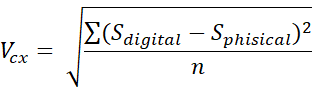
Where S represents the score in various categories. An expert audit aims for a variance (V) approaching zero.
- Visual Consistency: Does the minimalist, high-tech aesthetic of your website match the physical store’s lighting, scent, and decor?
- Linguistic Consistency: If your AI chatbot uses “Playful/Casual” language, but your in-store staff is “Formal/Stiff,” the brand feels schizophrenic. We audit for a unified tone of voice.
4. Strategic Checklist for Omnichannel Success (The 2026 Audit Matrix)
This is the core of a professional CX audit. Use this matrix to evaluate if your brand is truly “Unified” or just “Multichannel”.
Phase 1: Recognition & Data Flow
- Single Customer View (SCV): When the mystery shopper provides an email or phone number in-store, can the staff see their “Wishlist” or “Recent Returns” from the web?
- Loyalty Integration: Is the loyalty point balance updated in real-time on the customer’s phone the moment the in-store transaction is finalized?
- Targeted Personalization: Does the staff receive a “nudge” from the CRM to mention a product the customer recently viewed online?
Phase 2: Operational Synchronization
- Stock Transparency: If the website says “2 items in stock”, can the mystery shopper find them in under 3 minutes, or was the data “ghost stock”?
- Promotion Parity: Are all “Web-Only” codes clearly communicated to staff so they can explain the policy without frustrating the customer?
- The “Save the Sale” Protocol: If an item is out of stock in-store, does the staff have the tools (tablets/kiosks) to order it for the customer on the spot with free shipping?
Phase 3: The Human-Digital Hand-off
- AI-to-Human Continuity: If a query starts with a Chatbot/AI and moves to a phone call or in-store visit, is the context preserved, or must the shopper repeat their story?
- Digital Literacy of Frontline Staff: Can the staff troubleshoot the brand’s own app? If a customer can’t find a QR code, can the staff guide them, or do they dismiss the technology?
- Click-to-Curb Experience: For “Curbside Pickup,” is the staff proactive? Do they acknowledge the car’s arrival via geofencing, or must the customer call a phone number?
Phase 4: Post-Purchase Unified Experience
- Cross-Channel Feedback: If a purchase was made in-store, does the digital follow-up (email/SMS) acknowledge the specific store location and the name of the staff member who helped?
- Unified Support: Can a customer resolve an in-store issue via the website’s live chat, or are they told “you must go back to the store”?
5. Technical Tools: How We Audit the Gap
In 2026, Expert Mystery Shopper utilizes advanced tools to measure these gaps:
- Geofenced Time-Tracking: We measure exactly when a shopper enters the store’s “Digital Aura” vs. when they receive a physical greeting.
- Screen-Recording Audits: We record the staff’s attempt to use the internal CRM to see how much “Technical Friction” they face.
- Acoustic & Visual Analysis: We ensure that the sensory experience (music BPM, scent intensity) aligns with the digital marketing “vibe.”
6. The ROI of Closing the Gap
Why invest in an Omnichannel Audit? The numbers in 2026 are clear:
- Higher ATV: Omnichannel customers spend 4% more in-store and 10% more online than single-channel customers.
- Lower Customer Acquisition Cost (CAC): When the “Return to Store” process is seamless, it creates a virtuous cycle that reduces the need for expensive re-marketing ads.
- Brand Resilience: A unified brand survives market shifts. If your physical store must close (due to renovation or other factors), a unified customer will transition to your digital channel without hesitation.
Conclusion: The Invisible Bridge
Omnichannel excellence is not about having the most expensive technology; it is about having the fewest gaps. Every time a customer has to explain themselves twice, or every time they find a discrepancy between your app and your aisle, you lose a piece of their trust.
An audit from Expert Mystery Shopper provides the “outside-in” perspective needed to see where your silos are showing. In 2026, the brands that win are the ones that are seamless; where the technology and the people work so perfectly together that the customer forgets the “channel” entirely and simply enjoys the experience.
 English
  Spanish